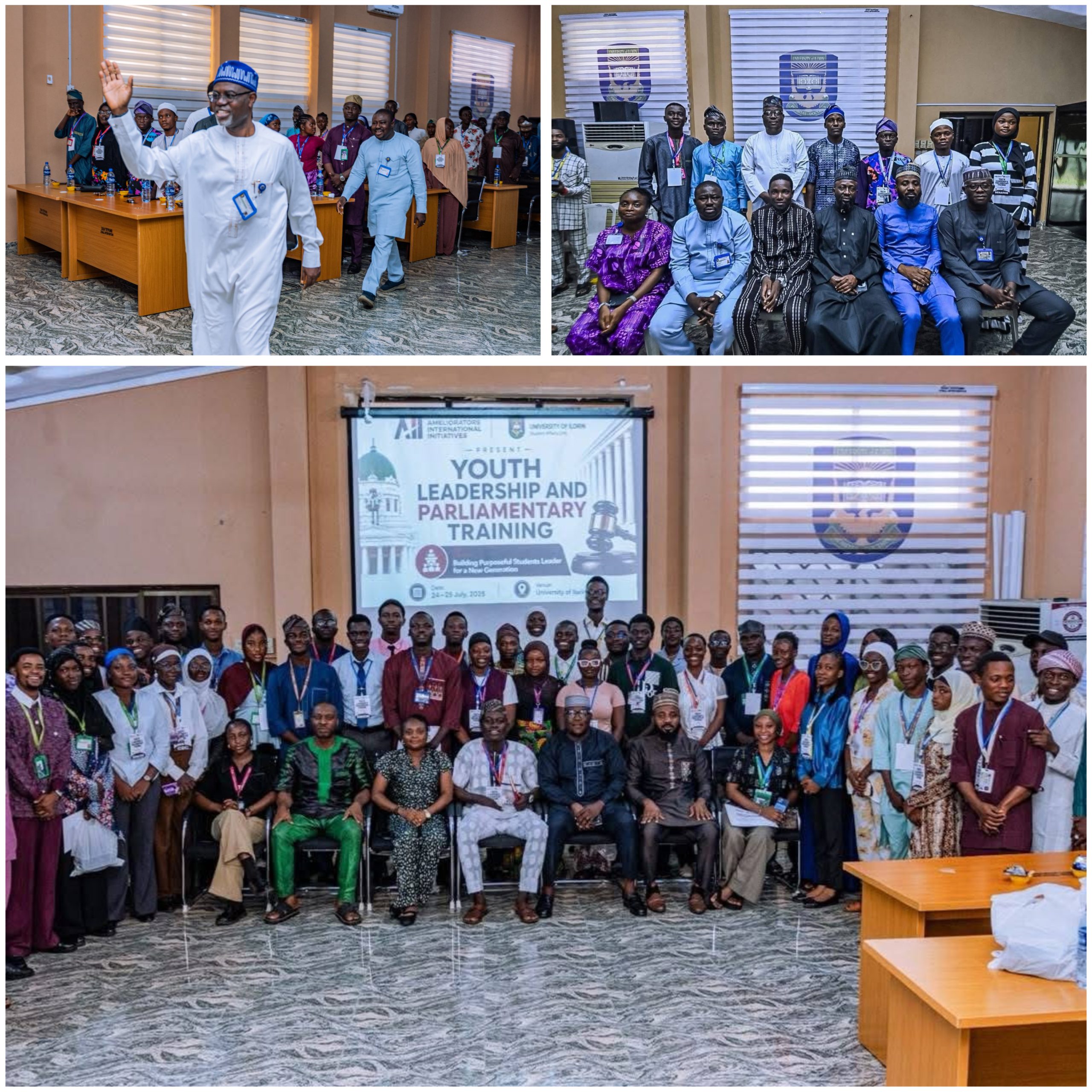
Ameliorators International Initiative Courts Partners to Take Parliamentary Training Beyond UNILORIN
Ameliorators International Initiative has called on development partners, donor agencies, corporate organisations and well-meaning individuals to support the expansion of its Youth Leadership and Parliamentary Training to universities and other tertiary institutions across Nigeria, following the successful conclusion of the programme’s second edition at the University of Ilorin.
This was contained in a statement made available to TheQuickPR and signed by the Executive Secretary of Ameliorators International Initiative, Ahmed Ishowo Yakub, following the two-day training held on July 24 and 25, 2026, at the University of Ilorin Auditorium Basement Hall.
Yakub said the organisation was seeking partnerships that would enable it to reach more young Nigerians and provide them with practical knowledge of leadership, legislative processes, democratic governance, public speaking and policy making.
He explained that the second edition, organised in collaboration with the University of Ilorin Student Affairs Unit, brought together Students’ Union executives, senators and faculty presidents from across the university.
According to him, the initiative is designed not only to improve the quality of student leadership on campuses but also to prepare young Nigerians for future responsibilities in public service, lawmaking, policy development and community leadership.
“Our goal goes beyond campus politics. We are raising young Nigerians who will become responsible public servants, lawmakers, policymakers and community leaders committed to integrity and national development,” Yakub said.
The Vice-Chancellor of the University of Ilorin, Prof. Wahab Olasupo Egbewole, who attended the programme, charged participants to uphold integrity and make service the foundation of their leadership.
The training featured academics, professionals and former student leaders who exposed participants to practical aspects of leadership and parliamentary practice.
Former student leader and National President of the Association of Nigerian Authors, Dr. Sheu-Usman Oladipo Akanbi, spoke on “Character Before Power: Ethics, Integrity and Accountability,” stressing the importance of building strong moral values before seeking positions of authority.
Also, former student leader and telecommunications expert, Comrade Tajudeen Habeeb, delivered a session on “The Fundamentals of Effective Leadership,” where he shared practical lessons on vision, decision-making and team management.
On the second day, the Deputy Director, Centre for Legislative Studies, University of Ilorin, Dr. Bakare Adebola Rafiu, addressed participants on “The Art of Lawmaking: Building Practical and People-Centred Legislation.”
He explained practical approaches to developing laws and policies that respond to the needs of students and their communities.
The Acting Dean of the Student Affairs Unit, Dr. Alex Akanmu, rounded off the sessions with a presentation on “Building the Next Generation of Democratic Leaders,” urging participants to embrace dialogue, inclusion and service in leadership.
Earlier, Yakub said the programme was building on the results of its maiden edition, noting that some previous participants had subsequently contested and won leadership positions in Students’ Union Governments and departmental associations.
“Leadership is not an accident. It is built through learning, mentorship and practice. The first edition produced results we are proud of. Many participants have gone on to contest and win positions in Students’ Union Governments and departmental associations,” he said.
He thanked the University of Ilorin management, Student Affairs Unit, facilitators, volunteers, student leaders and participants for contributing to the success of the second edition.
Yakub maintained that taking the programme beyond UNILORIN would require stronger institutional and financial partnerships, adding that such support would enable more students across Nigerian tertiary institutions to gain practical leadership and parliamentary skills.
He therefore urged development partners, donor agencies, corporate organisations and individuals interested in youth development and responsible leadership to partner with the organisation as it begins the next phase of the programme.