By: Shafihi Abdulrasheed, anipr
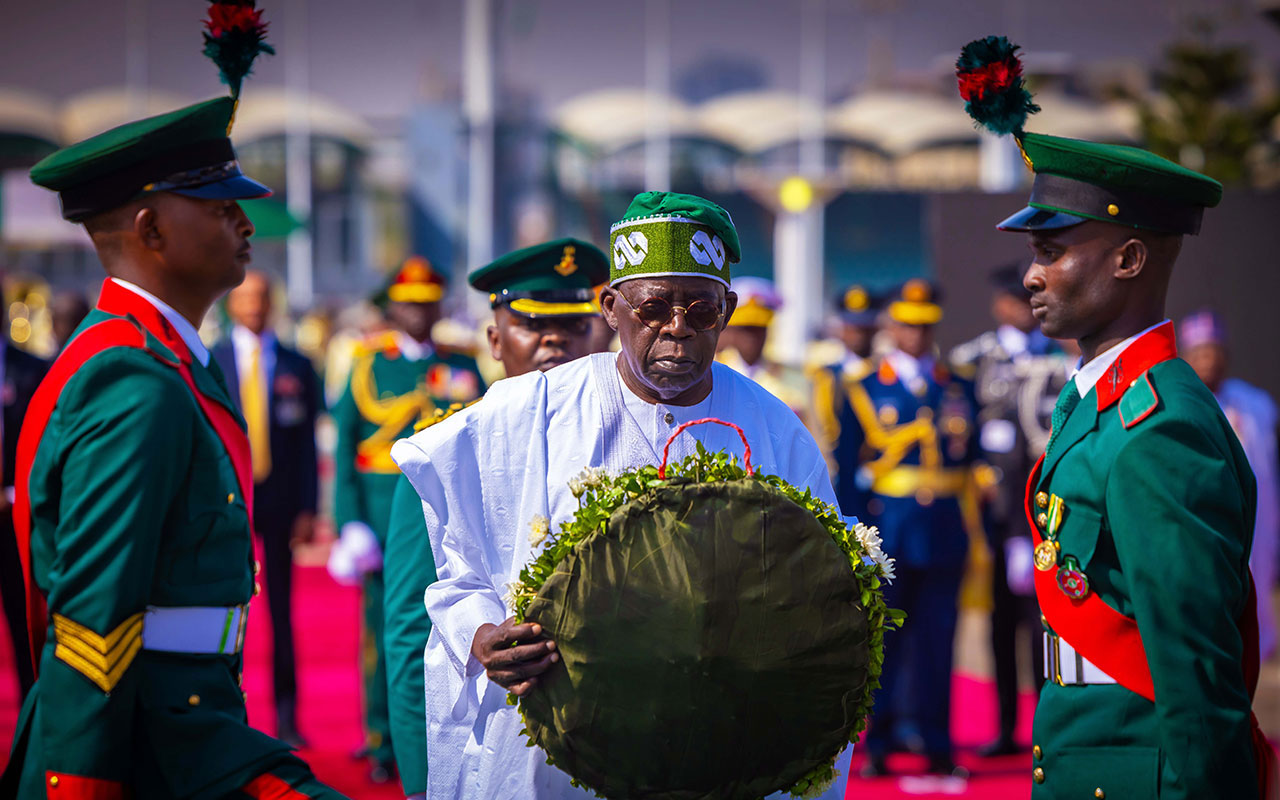
To pay the price of courage is to accept that leadership sometimes demands decisions that may not earn immediate applause. Across the world, the defining moments of consequential leaders have rarely been found in periods of comfort. They are often found in moments when difficult choices have to be made, when established ways of doing things must be questioned, and when a leader must be prepared to carry the burden of decisions he believes are necessary for the future. Courage in leadership, therefore, is not about taking risks; it is about accepting responsibility for those risks, standing by difficult decisions and ensuring that the people who carry the weight of the state are not abandoned in the process. This, in my view, is the context in which some of the recent decisions of President Bola Ahmed Tinubu should be examined.
Since assuming office, President Tinubu has governed at a time of considerable economic and security pressure. Some of his decisions have been difficult, some have attracted fierce criticism, and Nigerians have every democratic right to question the choices of those who govern them. But leadership should also be assessed fairly. Where government gets things wrong, it should be said without fear. Where it gets things right, we should equally have the courage to acknowledge it.
Hence, the recent approval of a significant salary increase for personnel of the Nigerian Armed Forces is, in my estimation, one of those decisions that deserves recognition, not simply because more money has been approved, but because of what that decision says about how a country values the men and women who defend it.
Under the new arrangement announced by the Presidency, about 250,000 personnel of the Armed Forces will benefit from salary increases ranging from 30 to 80 per cent. Officers above the rank of Colonel will receive a 30 per cent increase; personnel from Colonel down to Warrant Officer will receive 50 per cent; while those from Private to Staff Sergeant will receive an 80 per cent increase. The annual salary bill is consequently projected to rise from about ₦660 billion to ₦924 billion. At a time when government finances are under pressure and competing demands are everywhere, committing additional resources of this magnitude to military personnel is not a casual decision. It is a statement of priority.
For me, however, the real story is not contained in the percentages. It is found in the lives behind those numbers. For many years, Nigeria has demanded enormous sacrifices from its military personnel. We have asked them to confront terrorism in the North-East, banditry in the North-West, kidnapping, oil theft, violent criminal networks and other threats across the country. We have sent them into forests, mountains, border communities and difficult terrains. We expect them to stand guard while the rest of us sleep with our two eyes closed. Yet, beyond ceremonial occasions and public speeches, how often do we pause to think seriously about the welfare of the soldier behind the uniform?
Every soldier is somebody’s son or daughter, husband or wife, father or mother. The officer spending months away from home has responsibilities like every other Nigerian. His children go to school. His family pays bills. He worries about tomorrow. The young soldier stationed hundreds of kilometres from his family also dreams of progress in his career and a better future after service. When we speak about national security, therefore, we cannot separate military capability from military welfare. Weapons are important. Intelligence is important. Technology, logistics and training are indispensable. But the human being operating those systems must also be motivated, respected and adequately supported.
This is why I consider the President’s decision important. Money alone cannot defeat terrorism or banditry, and it would be misleading to suggest otherwise. But anyone who understands human institutions knows that morale matters. A well-motivated officer is more likely to approach his responsibility with confidence and a stronger sense that the institution he serves also cares about him.
President Tinubu put it appropriately when he said that the men and women who keep Nigerians safe in their homes must be supported and appreciated. I believe that principle should become permanent government policy rather than an occasional intervention. We cannot continue to demand patriotism on an empty stomach. We cannot ask men to put their lives on the line while treating their welfare as an afterthought. Neither should we wait until Armed Forces Remembrance Day before remembering that the peace enjoyed in our homes often comes at a personal cost to somebody standing guard somewhere.
At the same time, there must be no misunderstanding about the other side of this bargain. To whom much is given, much is expected. The improved welfare package places an even greater responsibility on our Armed Forces. Nigerians will expect stronger professionalism, greater discipline, improved civil-military relations and renewed determination in the fight against insecurity. Every additional naira committed to military welfare must ultimately find expression in greater commitment to protecting the Nigerian people.
The country is still confronting serious security challenges. Farmers must be able to return to their farms without fear. Travellers should be able to move from one community to another without constantly looking over their shoulders. Parents should not have to live with the fear that their children could become victims of kidnapping. Communities that have endured years of attacks deserve peace. Government has therefore taken an important step on welfare, but the military must respond with renewed vigour. The task before our servicemen and women remains enormous.
Then, there is another reason I believe this decision deserves closer attention. When placed alongside other actions of the Tinubu administration, it points to an emerging pattern in the government’s approach to workers and public institutions.
On July 18, 2024, President Tinubu approved a new national minimum wage of ₦70,000 for Nigerian workers following negotiations with organised labour. Far beyond that, he supported the review of the national minimum wage every three years rather than allowing workers to wait for a longer period before prevailing economic realities are reconsidered. That decision came at a difficult period for Nigerian families, when inflation and the rising cost of living were putting considerable pressure on household incomes.
I do not pretend that ₦70,000 suddenly removed the economic difficulties confronting Nigerian workers. It did not. Many workers still struggle with the cost of food, transportation, accommodation and other necessities. But leadership must sometimes be judged not only by whether every problem has disappeared, but also by whether government recognises the problem and begins to address it. President Tinubu’s intervention in the minimum wage negotiations demonstrated an acknowledgement that workers cannot be asked indefinitely to carry the burden of economic reform without some adjustment to their earnings.
The same principle can be seen in the government’s recent engagement with Nigeria’s university teachers. For decades, the relationship between successive Federal Governments and the Academic Staff Union of Universities became a recurring story of negotiations, broken agreements, warnings and strikes. Nigerians became so accustomed to university shutdowns that a four-year course could become five or six years through no fault of the student. Parents planned for four years and ended up paying for additional years. Young people watched their mates elsewhere graduate while they remained at home waiting for another dispute to be resolved. It became a vicious circle, and everybody knew that something had to give.
The Tinubu administration’s renegotiated agreement with ASUU, therefore deserves to be viewed beyond the immediate interests of lecturers. The Federal Government announced a 40 per cent increase in the Consolidated Academic Allowance for ASUU members, effective from January 1, 2026, alongside other welfare provisions under the renegotiated agreement. A new professorial cadre allowance was also introduced, providing additional remuneration for professors as part of efforts to improve the conditions of service within federal universities.
For me, the significance goes beyond what enters the lecturer’s bank account. The larger issue is stability. President Tinubu has repeatedly made the point that a four-year university course should remain a four-year course. That should ordinarily be an unremarkable statement, but Nigeria’s experience makes it profoundly important. A parent who sends a child to university deserves some certainty about when that child will graduate. A student admitted for a four-year programme should be able to plan his or her life around four academic years. A lecturer deserves conditions that allow him to teach, conduct research and develop professionally without recurrent disputes over agreements that ought to have been settled.
The welfare of lecturers and the stability of universities are therefore two sides of the same coin. If lecturers are expected to produce doctors, engineers, scientists, teachers, economists and other professionals needed for national development, their own conditions of service cannot permanently be swept under the carpet. Then, addressing elements of the long-running dispute with ASUU, the Renewed Hope administration is attempting to break a cycle that has cost Nigerian students and families dearly over the years.
President Tinubu has taken a courageous step. He will certainly continue to face criticism because that comes with the territory of leadership, especially at a difficult time in Nigeria’s history. But politics should not prevent us from acknowledging policies that serve the national interest. We should be able to disagree with a President on one matter and commend him on another. That is how mature democracies grow.
One last thing: may our Armed Forces find renewed strength to secure our land, find dignity and reward in their labour. May our universities never again lose precious academic years to avoidable disputes.
Shafihi Abdulrasheed, anipr is a PR practitioner and perception manager. He writes from the Media, Communications and Public Affairs Directorate of the City Boy Movement National Headquarters. He can be reached via sharvee2@gmail.com | +2348109941929